
|
|||||||||||||||||
|---|---|---|---|---|---|---|---|---|---|---|---|---|---|---|---|---|---|
| MUSIC | MIXES | SIXX MIXX | INFO | PRESS | CHARTS | CONTACT | |||||||||||
Lists, as tweeted so embarrassingly accurately by Bruce Levenstein, made by "music dudes" (sigh) are, indeed, dumb. I've been compiling my self-indulgent ramblings about the Year in Tunes and Stuff since the '90s, and if there ever was a time anyone cared about them, that time has definitely passed. But, honestly, it's fun, I like doing it, I'm #humblebrag #blessed to listen to music as part of my job, and it's an enjoyable challenge to sum up the year. Sometimes I've had outlets for a kind of semi-professional list: this year, for instance, my gig at Amazon Music allowed me to assemble Dance and Electronic Songs of 2018, based on a deeply compromised mixture of acknowledging the pretty good mega-hits, noting critical faves, discoveries from some interesting Amazon data, and my own personal opinions. However, that implies my own, beholden-to-no-paycheck-giver-or-advertiser lists here on partyben dot internet dot edu are not themselves compromised, and of course that's not true. Even in trying to access my personal feelings about a song or an album, I'm of course influenced by other critical voices and context, and there's often a balance between criteria such as "what was fun to listen to" versus "what Feels Important." For instance. My 2014 album pick, Caribou's Our Love, was, well, pure love-based, an album I returned to over and over again with sheer bliss. On the other hand, my #1 album in 2016, David Bowie's Blackstar, was profoundly painful to listen to, devastating, and yet it felt like an album I'd come back to for the rest of my life, an artistic landmark. This year, it's a strange mix of various considerations that landed, somewhat to my surprise, the 12th album from a band I've adored for 24 years at my #1 spot. My end-of-year chart history for Minnesota band Low includes Secret Name (my 1999 #5) and Things We Lost in the Fire (my 2001 album of the year). I don't have any evidence I made a list in 1996 (although I may have put one together and shared with friends at LIVE 105); if I did, it's likely Curtain Hits the Cast would have been in the Top 3, although with tough competition from DJ Shadow's Endtroducing, Stereolab's Emperor Tomato Ketchup and Beck's Odelay (what a year!) it's hard to say. The point is, Low has been such a great band, and such a part of my life, for so long, that at this point it's possible I sort of take them for granted. They've been confounding expectations and doing Things You Never Thought Low Would Do for a long time. Even so, Double Negative is a shock at first listen. For those of us weaned on the purity of harmonies and the heartrending delicacy of the voices of Alan Sparhawk and Mimi Parker, hearing those voices trampled, shattered, seemingly crushed under thundering distortion, can be painful. First track "Quorum" is unflinching, opening with a sound somewhere between a needle grinding on extremely dirty record's inner groove and emanations from a faraway quasar. The voices are subsumed under severe sidechaining, a common practice in party-style EDM these days, but here it has the opposite effect, a kind of claustrophobia, as if the signal is being squeezed through the narrowest possible band to reach us. You get a hint right away that there's something possibly political going on, with a bleak, heartbreaking admission that "To let them win the war/So fast and quick we ran." Radiohead have previously been masters of creating work that feels like a desperate cry to the heavens, a last signal to any sympathetic aliens dudes out there from a society on the verge of extinction, but on Double Negative Low, er, double down on that idea, with a sense (kind of like the obscure, weirdly Tardis-evoking artifact on the cover) that this is a recovered transmission, what that last hymn would sound like once it was finally received across the galaxy. Track two, "Dancing and Blood" offers at least a hint of Low's signature haunting guitar work, but over a thudding loop that sounds like nothing so much as an amplified artificial heart. Mimi's anguished vocals continue the theme of contrition and guilt: "All that you gave/Wasn't enough." Track three, "Fly," is mercifully (comparatively) normal, sonically, with a jazzy bassline underlying a resigned, exhausted lament: "You gotta tell me when it's over." Part of this sonic experimentalism can be attributed to producer B.J. Burton, with whom they worked on 2015's Ones and Sixes, but the collaboration truly flowers here. Like great apocalyptic albums from the aforementioned Radiohead or Boards of Canada, Double Negative doesn't shy away from moments of soaring beauty, like the delicate "Dancing and Fire," and by the end of the album, the pounding loop underlying the blissful harmonies of "Disarray" sounds almost like, well, this is the new normal for Low. Ironically, submitting everything, including their voices, to sonic experimentation, seems to have freed them. I love Stereogum's vivid review of the album (which I've tried not to plagiarize too much of); author Ryan Leas hones in on something essential about the album, refuting critics who called it "abrasive:"
Double Negative isn't caustic for the sake of it, but more than any album this year, it acknowledges the horror of our disintegrating discourse and the (inevitable?) rise of self-destruction as a societal impulse. Back in the '90s, I was barely out of college and failing at real life in Minneapolis. I'd spent nearly a year miserably temping and trying to get a government job that would have sucked anyway, and when it fell through, I decided to try and make a new start of it in San Francisco. In 1993, the University of Minnesota had transitioned its AM radio station KUOM to a student run music format called Radio K;, its 5000-watt signal reached miles across the midwestern prairie with its warm, lo-fidelity AM sound. On a warm fall day in 1994, I packed my few possessions into my rickety car and started the drive across the country. I tuned into Radio K and Low was performing live in the studio. They were already known among people I hung around with at that point, "Too Many Words" had become a bit of a staple, and I was already a fan. As I drove towards the setting sun, the broadcast stayed with me for miles, still audible even into Iowa, slowly fading into static. It was an appropriate lament for the loss of what I was leaving behind and the uncertainty of my future, and now that I think about it, oddly prescient of the static-filled sound of their 2018 album. In early 2004, my friend Patrick (who along with his wife Kristi had eventually joined me in San Francisco from Minnesota) died within months of an out-of-nowhere cancer diagnosis. As ex-Minnesotans (and big fans) both of them were my constant companions at Low concerts in the Bay Area, more often than not at the Great American Music Hall. Just days after Patrick's death, Low happened to be playing the GAMH again, and Kristi and friends and I attended, still in a zombified state of shock and grief. For some reason it seemed important to us to make the situation known to the band, and as they were conveniently selling their own merch before the show (oh, Low), we went up and introduced ourselves and with what seems now like incredible presumptiveness asked if they'd mention Patrick at some point during the show. To their great credit, they probably sensed our bewildered, despairing state, and in fact before one song (which one, I can't remember), Alan offered, "this is for Patrick." We held each other and cried. Now, unimaginably, here we are in 2018, and of course my estimation of this album is compromised, inseparable from how this American treasure of a band has been with me my whole adult life. The tragedy now seems vast, our world seems irrevocably lost, and Low have braved the depths of that horror and suffused themselves in this atmosphere of confusion and guilt, creating a defining work of the era and possibly their greatest achievement. "It's not the end/It's just the end of hope," Sparhawk sings in "Dancing and Fire," such a devastating line, and it's both a straightforward reference to Obama, an accurate assessment of our current state of mind, and an acknowledgment that despite all our attempts at historical parallels at times of disintegration, we never know what's to come. It's not the end: Something will survive this chaos, what survives may be shards, and in those jagged shards there will be a haunted beauty.

2004 was a bit of a "between time" for electronic music. Can anyone name the "sound" of 2004? There was the proto-EDM of Eric Prydz' bombastic "Call On Me," the cross-genre revolutionary spirit of M.I.A.'s "Galang," and indie-punk-dance upstarts like LCD Soundsystem. Into this uncertain mix, oddball Scottish producer Mylo released an unassuming album called Destroy Rock 'n' Roll. Witty, silly even, dropping in the most cartoonish samples and hippie-dippie speechifying, it was unlike anything else at the time, offering both a wink and an unabashedly joyous spirit. It landed on our poolside boombox at Coachella that year, and I remember thinking its balance of upbeat but quirky electro and sunny vibes was perfect for an afternoon with friends. Destroy Rock 'n' Roll has sadly itself been sort of destroyed in the streaming age, since its profusion of uncleared samples means no-one is willing to distribute it. (I argue its lack of availability makes it one of the great current unheard albums, along with De La Soul's Three Feet High and Rising, something to keep in mind when bloviators preach that the internet age means everyone has everything they want instantly at all times). Destroy didn't end up on my Top 10 list that year, but in hindsight it probably should have; it's an album that's so proudly uncool, unconcerned with the very concept of cool, that it kind of redefines cool around itself. I won't make that mistake with the ridiculously uncool and yet utterly charming Knock Knock by German producer DJ Koze. Koze himself described the remote Spanish village where he produced the album as "totally different from the desperate big city, where you try to make cool music," and the bright Spanish sun shines across the entire sprawling album, from the blippy downtempo opener "Club der Ewigkeiten," to the glorious piano house of track 15, "Seeing Aliens." Even the guests are deployed sunnily: Speech of Arrested Development adds his languid tone to the bouncy "Colors of Autumn," Sophia Kennedy's angelic voice is layered and scrambled over the beatific "Drone Me Up, Flashy," and perhaps most delightfully, Swedish heartstring-puller Jose Gonzalez delivers a vocal as sweet as a lullaby over the retro-psychedelic, Bibio-esque "Music on my Teeth." Let's be real, a guy titling a soul-sample glitch-hop track "Baby (How Much I LFO You)" is not worrying one bit about being cool, and just to make it abundantly clear, he's gonna put on a silly hat and climb into a Dr. Seussy tree for the goofy cover shot. (More about the heartrending yet ecstatic centerpiece single "Pick Up" in my singles list below, by the way.) It's been a long time since I've been to a pool party or, um, had friends, but listening to this gorgeous, freewheeling album brings a little sun to even the darkest winter.
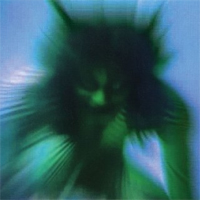
My first exposure to Mr. Tumor was his 2016 album Serpent Music, a clattering, experimental work that belied its performance art trappings with intriguing textures and hypnotic melodies. But there was nothing preparing me for his work this year. At my job, I was lucky enough to be in the room when reps from Warp came by to play some new music, including Tumor's yet-to-be-released first single "Noid." After they played it, I sat dumbstruck, looking around the room, like, would it be unprofessional for me to say this song is blowing my mind and I want to hear it again? More on that song below, but the entire album is pretty mind blowing, a unique piece of sonic agit-pop that feels both utterly new and weirdly familiar. There are echoes of Beck's eclecticism and sense of play, TV on the Radio's scale and intensity, and M.I.A.'s fearlessness and political awareness, but it sounds like nothing else. It opens with a blast of retro orchestral stabs and flanged-out fuzz, emerging from a sludge of sound with the glacial beat sof "Economy of Freedom," and reaching a quirky '80s-electro groove on "Honesty." Much of the album subverts the title with fractured tales of heartbreak, like the haunting "Licking an Orchid," with its desperate refrain of "please come home," and the tortured "Recognizing the Enemy": "It hurts so much/Knowing that I couldn't help." It's an extreme listen, for sure, but at times oddly groovy, unable to resist getting caught up in great, bounding riffs. Despite what may be irony in the title, I promise you're safe venturing into Yves Tumor's experimental visions.
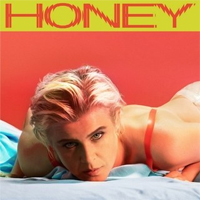
It's so strange to think this is Robyn's first album in eight years. Despite Honey feeling in some senses just like a continuation of what she was already doing, it somehow seems more vital, more necessary than ever. I never included her previous work in my year-end best-ofs, but Honey is both irresistible in its pure, inimitable Robyn-ness and incredibly surprising. First single "Missing U" felt instantly familiar upon its release—like, how did Robyn not already have a song called "Missing U"?! And "Ever Again" does the patented Robyn trick of singing in character of someone possibly in denial (see "Call Your Girlfriend"). But album centerpiece "Send to Robin Immediately" pulls a total shocker: after its minute-plus beat-free intro, it resolves, thrillingly, into a pitched down loop from Lil Louis' "French Kiss," and are those the arpeggiated tinkles from Cyndi Lauper's "All Through the Night"? It's one of the most thrilling musical moments of the year, and it turns out that's producer Kindness on that one, kudos there. But for much of the album production was helmed by Joseph Mount of Metronomy, and there's a wryness here that's recognizable from that fine band's work as well. The album's arc of heartbreak to reunion means its compact nine-song, 40-minute length feels perfect, focused and complete. Don't leave us, ever again, Robyn.
Dedicated readers of my year-end lists will know a couple things, 1) This is silly, and 2) I really have a thing for Leon Vynehall. I was thrilled by his 2014 track "It's Just (House of Dupree)" which echoed J Dilla over a hypnotic house beat, and then dumbfounded by his 2016 album Rojus (Designed to Dance), which connected the dots from vogueing/ball culture to bird of paradise mating rituals (for reals). It made sense that a producer evolving so quickly would have ambitions that stretched beyond house music, and Nothing is Still represents his emergence as an artist of incredible capacity of vision. The story goes that on the occasion of the passing of his grandfather, his grandmother told him for the first time the story of their emigration from Southampton to New York City, and he was inspired to create an album reimagining that journey. Recruiting a ten-piece string ensemble and creating an accompanying film and novella, this is a grand, cinematic gesture, filled with awe at the uncertainty of the immigrant experience and, specifically, a tribute to New York City, looming impossibly on the horizon, grand and overwhelming. While various themes and tempos appear and disappear (some jazzy sax evokes the era at times, but Vynehall doesn't shy away from his usual house beats), this is truly an album, split into "chapters" instead of songs, best experienced as a whole. At this awful, sickening, dangerous political moment when the very notion of immigration is demonized by cynical politicians, the scope and grandeur of Still is a vital antidote, a reminder of what America truly is, and moreover a hymn to the universality of change, the ceaseless movement at the center of the human experience.
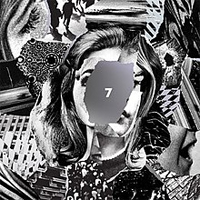
On their seventh album, the now more-or-less legendary Baltimore duo sought out Panda Bear producer and Spacemen 3 alum Peter Kember, and the fit is perfect, rendering Beach House's signature timeless sound somehow even more essential and transcendent. Jaunty opener "Dark Spring" could have been produced at any time in the last 30 years, a nod to Blonde Redhead or Stereolab, and "Lose Your Smile" evokes mid-period Air or mellow Beck. The glacial fuzz of strummy "Pay No Mind" echoes Mazzy Star and, of course, My Bloody Valentine, whose dedication to a glorious and uncompromising sonic purity, seemingly unaffected by trends or, like, meaning, perhaps most informs the Beach House agenda. Pitchfork, I think quite poetically, expressed the difficulty of comparing Beach House albums by saying "how do you compare daydreams," but on 7 the duo have never sounded more vivid and alive.
Blame our current digital/emoji/millennial/whatever culture, but these days album art is pretty much only seen in miniscule form while thumbing around on a smartphone, a development that does sadden old guys like myself who remember childhood afternoons spent poring over the fascinating, baffling details of densely packed album covers like Prince's 1999. Kids these days ain't doing that. Tellingly, until not long ago, I thought the cover for Skee Mask's haunting Compro was just a plain light-blue field—in my defense, I'd probably only seen it in ten-by-ten pixel size (and my eyes aren't what they used to be). One day I stumbled across a high-resolution version and discovered with a bit of a shock that the cover is actually a photograph, with what seems to be a ghostly bundled figure struggling against an expanse of snow. This discovery oddly parallels the experience of listening to this album, whose hidden patterns and layers don't really reveal themselves until after multiple listens. The hypnotic "Session Add" takes Boards of Canada into orbit, and the rollicking drum 'n' bass of "Soundboy Ext." contains subtle bends in tone at its core, like a train whistle dopplering past. There's both an icy vastness and a jittery claustrophobia here, like a cramped lunar module hurtling through space. While nodding to the history of breakbeats, Compro feels totally new.
It has been fascinating to watch the "emergence" of the artist known as SOPHIE, whose PC-music-adjacent anonymity was part of the baffling charm of 2013's freestyle-from-beyond-the-ultraverse freakout "Bipp"—what human could possibly be making these sounds? Well rather than the giant robot with knives for hands I had imagined, SOPHIE turned out to be a delicate-featured transgender woman, and she came blasting out of the anonymity closet with a soul- and body-baring video for the surprisingly earnest "It's Okay to Cry" last year. It was clear immediately that SOPHIE would now be all about life-into-art, and her debut album wields autobiographical revelation (and its potential spuriousness) with a poker face that invites a spiraling, is-this-real-or-isn't-it analysis. Tracks like "Ponyboy" recall the dark twists of her 2015 release Product, and "Immaterial" revels in giddy PC-music cartoonishness, but there's something new and wonderful here, epic soundscapes like "Pretending" and the emotive, cinematic sci-fi of "Infatuation." The soaring heart of the album is the operatic, Kate Bush-meets-trance "Is It Cold In the Water" (more about that in the singles list below). Confirmed by an alternately thrilling, alternately teetering on the edge of anxiety-inducing performance at this year's Sonar festival, I'm not entirely sure what to make of SOPHIE, but there is noone remotely like her making music on Earth.
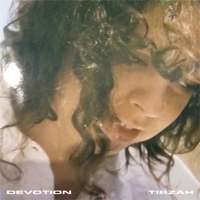
London artists Tirzah and Micachu are known for underground, spacey club tracks like 2015's sparse "Make It Up," and Micachu (aka Mica Levi) has expanded her production pallette into soundtrack work for films including the brilliant "Under the Skin." Devotion applies their skills more freely and subtly, stepping back to give space to Tirzah's remarkably expressive and un-self-conscious voice. Free-form opener "Fine Again" features lullaby-esque vocals alternating with chiming arpeggios, and the haunting, heartbroken "Affection" wields a snippet of piano echoing into the distance behind glitching whispers. While you might see this in the "electronic" section of the store due to its production, you could also call this R&B or put it next to James Blake with its confessional songwriting and minimalist loop-based experimentalism. But overall, it's the sheer intimacy that affects you, the sense that you're spying on those secret moments of joy and heartbreak in a relationship.
My music critic hero Philip Sherburne called German producer Hauff's noisy, damaged beats "opulent" in their attention to detail, and he's pinpointed the key to her work; even when tracks on Qualm consist of little more than drum programming, their perfectly calibrated distortion makes them rich, full and grand. It's an idea I kind of stumbled across in my early days of doing audio work at LIVE 105; the production director (and in fact legendary disco DJ himself) Lester Temple had a couple "magic boxes" in his rack that somehow just made things sound bigger and fatter, grabbing your attention through the radio static and traffic noise. I later discovered the "magic" in these boxes was more or less just distortion, carefully applied to certain frequencies to seemingly pump them up. Something about random chaos applied to tones just made them tastier, like the carbonization on a slab of meat on a fire. Similarly to my 2017 #8, DJ Seinfeld's Time Spent Away From U, Qualm's compressed sonic palette is a unifier, whether it's on the squelching acid of "Lifestyle Guru" or the nearly synthwave "Primordial Sludge." Album closer "It Was All Fields Around Here When I Was a Kid" echoes Depeche Mode or The Knife in its dark midtempo stomp, but the sound here is thick with history, enhanced by its patina like a great sculpture.
11. Earl Sweatshirt - Some Rap Songs (Columbia) 12. Jon Hopkins - The Singularity (Domino) 13.
тпсб -
Sekundenschlaf (Blackest Ever Black) 14.
A.A.L. (Against All Logic) -
2012-2017 (
Other People) 15.
Hookworms - Microshift (Domino) 16.
Nils Frahm -
All Melody (Erased Tapes) 17.
Julia Holter - Aviary (Domino) 18.
Marie Davidson - Working Class Woman (Ninja Tune) 19. (tie) Rhye - Blood Remixed (Loma Vista), Kelela - Take Me A_Part, The Remixes (Warp) 20.
Laurel Halo - Raw Silk Uncut Wood (Latency) 21. Chong the Nomad - love memo (Chong the Nomad)
![]()
Like my favorite song of 2015, Tame Impala's "Let It Happen," "Pick Up" does the magical trick of illustrating musically what it's about lyrically: evoking the melancholy sweetness of not wanting something beautiful to come to an end by itself never feeling like it resolves. The track metamorphosizes constantly, altering percussion, widening the stereo separation, dropping out the bass, a constant reevaluation of its theme, reluctant to let go. After its initial release in April, the track eventually appeared in a variety of versions, differing mostly in length: a 4-minute, "Even Shorter Version," a 10-minute "Extended Disco Version." While this is of course standard for club tracks, here these versions seem to acknowledge this hypnotic aspect of "Pick Up," it's a song that seems to will itself to go on forever, and perhaps in some universe is going on forever, a loop of this sweet, wistful, saudade moment: a couple locked in a final embrace, a last moment in a beautiful city, a crowd thrilling to an epic DJ set, not quite ready to go home.
11. Jon Hopkins "Emerald Rush" (Domino)
|
|
||||||||||||||||||||||||||||||||||||||||||||||||||||||||||||||||||||||||||||||||||||||||||||||||||||||